We have solutions for OEMs (vehicle builders, engine builders, CNG/LNG/LPG system builders, energy system producers) as well as professional operators interested in retrofitting existing vehicles or engines (industrial vehicle fleets).and commercial, public transportation, waste collection, marine and industrial applications, energy generation systems).
The replacement of LPG in Dual Diesel is approximately 30%, allowing savings of more than 20%.The substitution of CNG in Dual Diesel is approximately 50%, allowing savings of more than 40%.
Save on fuel and maintenance
The price of Autogas allows short-term amortization of the cost of the equipment in your vehicle.The price of Autogas ranges between 40% and 50% less than traditional fuels in the case of LPG, with CNG being even cheaper.It must always be taken into account that the savings depend on the type of engine, its models and the user’s driving.
In addition to fuel savings, we must add maintenance savings.Vehicles with Autogas produce less wear, so they have fewer breakdowns, longer oil change periods and longer engine life.
Fuel savings of up to 50% in dual-gasoline
The substitution of LPG in gasoline is 100%.so you get savings of up to 50% on fuel
Economic data, CNG profitability table in a truckv
Our value is the plurality of solutions
With our association with the best component manufacturers, we have solutions for OEMs (vehicle builders, engine builders, CNG/LNG/LPG system builders, energy system producers) as well as professional operators interested in vehicle retrofit.or existing engines (industrial and commercial vehicle fleets, public transport, waste collection, marine and industrial applications, energy generation systems) to specific solutions for the end customer.
Vehicles equipped with the BIOFUTUR TRUCK system record significant improvements in emissions of the main pollutants, the most important of which is particulate matter (PM);Thanks to the high percentage of Natural Gas used in the d-gid system, CO2 emissions in the atmosphere are reduced (10% with CNG or LNG and 50% with Biomethane).
Using a mixture of air, Natural Gas and a small percentage of Diesel, significant economic savings are obtained thanks to the price difference between Natural Gas and Diesel.Manages to reduce operating costs between 10-30% on average
Environmental benefits of the company
Installation timeline
Functional diagram of the Biofutur Truck system
Description of components:
1.- Electronic control.
The electronic control unit is responsible, through the signals it receives, for adjusting the amount of gas supplied to the engine, always keeping it at the schiometric setting to optimize consumption and performance.
2.- Switch.
The switch allows you to connect and disconnect the DUALFUEL system.It also includes a gas tank level indicator.
3.- Injectors.
They are devices controlled by the BIOFUTUR electronic control unit and responsible for injecting the appropriate amount of gas into each cylinder.
4.- Pressure reducer/regulator.
The pressure reducer has the mission of reducing the pressure of the stored gas to its working pressure.It incorporates a solenoid valve that blocks the passage of gas when the engine is stopped or when the vehicle operates in 100% diesel mode.
Hydrogen Tank: Contains pure hydrogen (at -253 degrees Cº and 700 Bars)
6.- Tank valve.
This is a manually operated stopcock that is used to isolate the tank from the system.Allows you to carry out system maintenance operations.
7.- Gas loading mouth.
Filling mouth to be able to load gas into the tanks.It incorporates a valve that blocks the passage of gas when the engine is stopped or when the vehicle operates in 100% diesel mode.
8.- Pressure and temperature sensor.
It is responsible for informing the BIOFUTUR control unit of the instantaneous pressure and temperature values of the methane.
9.- Position of the fuses: Near the battery.
RELATED PRODUCTS
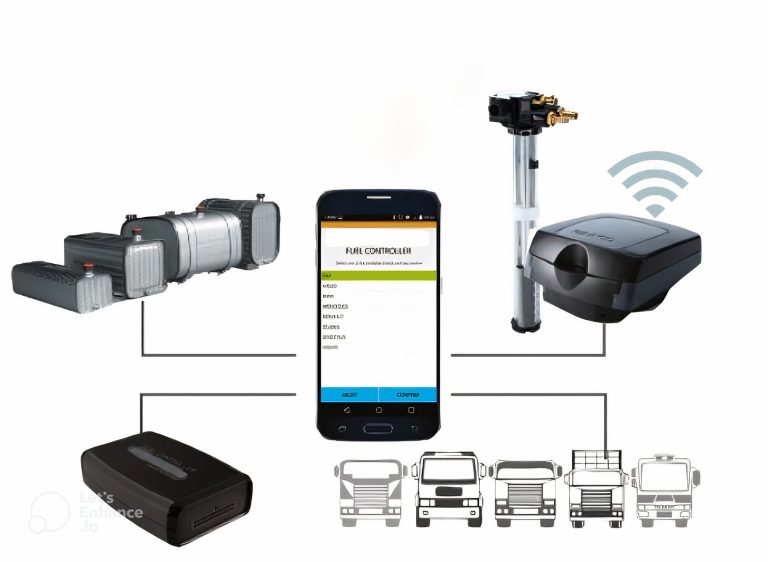
EFFICIENT DIESEL CONTROL SYSTEM
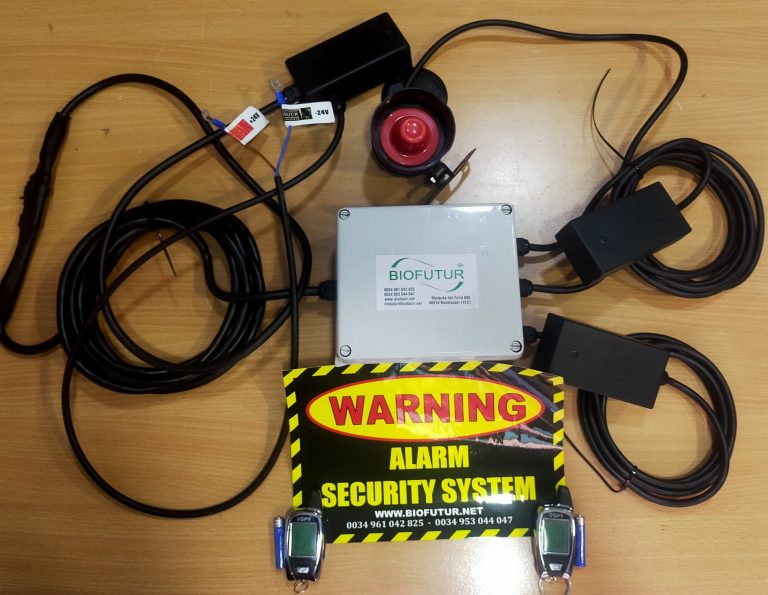
ANTI-THEFT ALARM FOR FUEL TANKS AND BATTERIES
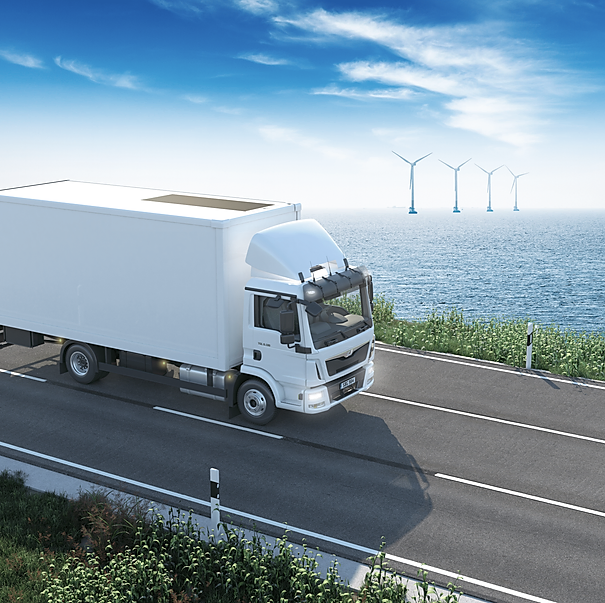
PHOTOVOLTAIC MODULES ON INDUSTRIAL VEHICLE ROOFS
Our products are highly versatile as they are compatible with a wide variety of brands, including Mercedes, Iveco, MAN, DAF, Scania, Renault, Volvo, Ford, BMC and Fuso.